
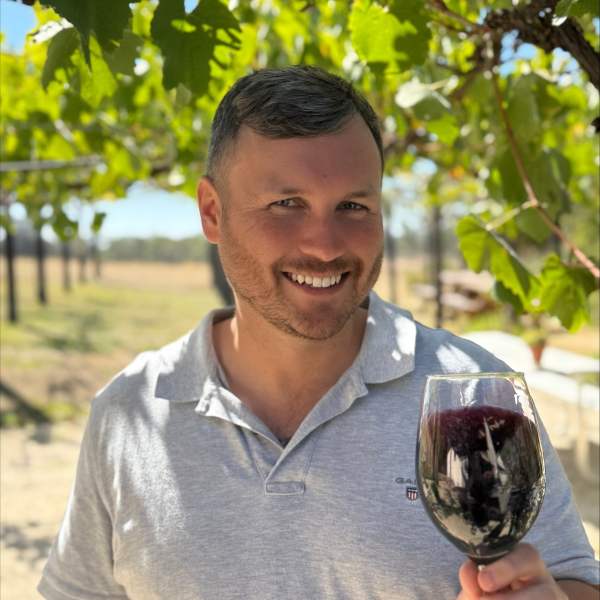
Eden Walpole
Senior winemaker at Vinesmith Wine Group
“Wine is ultimately about bringing people together, and that’s something I never lose sight of.”
When did you realise you wanted to become a winemaker?
I was initially studying to become a history teacher. During that time, I was working in cellar doors and became increasingly fascinated by wine and the stories behind it. What started as an interest in wine appreciation quickly evolved into a curiosity about how wine was made. I completed a vintage in my home region of the Hunter Valley, followed by a vintage overseas.
Winemaking combined everything I enjoyed; science, agriculture, history, creativity and working with people. From that point on, I knew it was the career I wanted to pursue.
Please tell us about your career so far.
I began my winemaking journey more than fifteen years ago. I had always been fascinated by wine, its cultural significance, and the role it has played throughout human history. Following several vintages, I completed my formal winemaking studies at Charles Sturt University while continuing to gain practical experience in the cellar. I was fortunate to work alongside and learn from some outstanding winemakers and mentors, which helped shape my approach to wine.
Since joining the Vinesmith Wine Group in 2023, I have worked across the Group’s Blue Pyrenees Estate, Glenlofty Estate and Decameron Station. Experiencing the diversity of sites, varieties and terroirs across both the Pyrenees and Grampians regions has been incredibly rewarding.
What do you love most about being a winemaker?
What I love most about being a winemaker is the connection between people, place and season. Every vintage presents a unique set of challenges and opportunities, and no two years are the same. Wine has an incredible ability to tell a story, and I feel privileged to work with vineyards that allow us to express the character of both regions so clearly. Equally as important are the people involved; from the vineyard and winery teams, through to sharing a finished wine with consumers. Wine is ultimately about bringing people together, and that’s something I never lose sight of.
What is your favourite wine, and what food do you typically pair it with?
For me, great Chardonnay has an incredible ability to reflect site and season while remaining both complex and approachable. At home, I tend to pair Chardonnay with seafood, roast chicken or simple Mediterranean-style dishes. The versatility of the variety is one of the reasons I enjoy it so much. Whether it is a fresh, mineral style or something with greater texture and complexity, Chardonnay is a wine that I never tire of exploring.
Is there a specific process you follow in developing a new wine?
Every new wine begins in the vineyard. Understanding the site, variety and intended style is critical before any winemaking decisions are made. From there, I spend a lot of time considering what I want the wine to express and which techniques will best support that outcome. I generally prefer a restrained approach in the winery, allowing the fruit and vineyard character to remain the focus.
Is there a specific vintage you are particularly proud of creating? Why?
I’m particularly proud of the 2024 Blue Pyrenees Estate vintage. While it was a warmer year, the season was remarkably even and produced wines with excellent flavour development, structure and balance across all varieties. The whites retained freshness and intensity, while the reds developed impressive concentration without losing elegance. The 2024 wines are fantastic expressions of modern Pyrenees terroir and showcase the quality potential of the region across a broad range of styles.
How does the local climate/soil affect the wine you make?
With our cool climate conditions, our vineyards in the west are consistently cooler and drier than our blocks on the east of the Ranges, which run up to 600m. The Pyrenees and Grampians foothills GI’s benefit from warm days and cool nights throughout the growing season and into harvest. This diurnal temperature variation allows fruit to achieve full flavour development while retaining natural acidity, producing balanced wines.
The region’s soils are largely derived from decomposed granite, sandstone and quartz-rich materials. Many of our best vineyard blocks are planted on relatively shallow alluvial soils over these parent materials, forcing vines to work hard and naturally regulate vigour. When seasonal conditions align, these sites can produce wines with remarkable concentration, detail and a strong sense of place.
Which of your own varieties do you typically indulge in?
I’m a big Nebbiolo drinker at home. I enjoy its structure, perfume and complexity, and I find it incredibly versatile whether enjoyed with a meal or on its own. Nebbiolo is still a relatively new chapter for us at Blue Pyrenees Estate, and I am very excited about its future. Some of Australia’s most compelling examples come from the Pyrenees region and I believe in the tremendous potential of the variety in establishing itself as one of the signature wines of the region.
Where do you see yourself in five years? How do you think your winemaking will evolve during this time?
In five years, I hope to continue growing as both a winemaker and a leader within the Australian wine industry. While titles and roles may change, my passion will always remain centred on vineyards, people and producing wines that genuinely reflect the region. I expect my approach will continue to evolve towards producing wines with greater purity, site expression and authenticity, while remaining adaptable to the challenges and opportunities presented by a changing climate.
From Wineries of Australia 2026–2027, edited by Alice O’Brien, Belinda Coleman, Chloe Jaenicke and Stefani Grinberg